
ECO SCIENCE YOUTH
I believe meaningful change can begin from small, local problems.
Even the smallest research efforts have the potential to plant seeds for future impact.
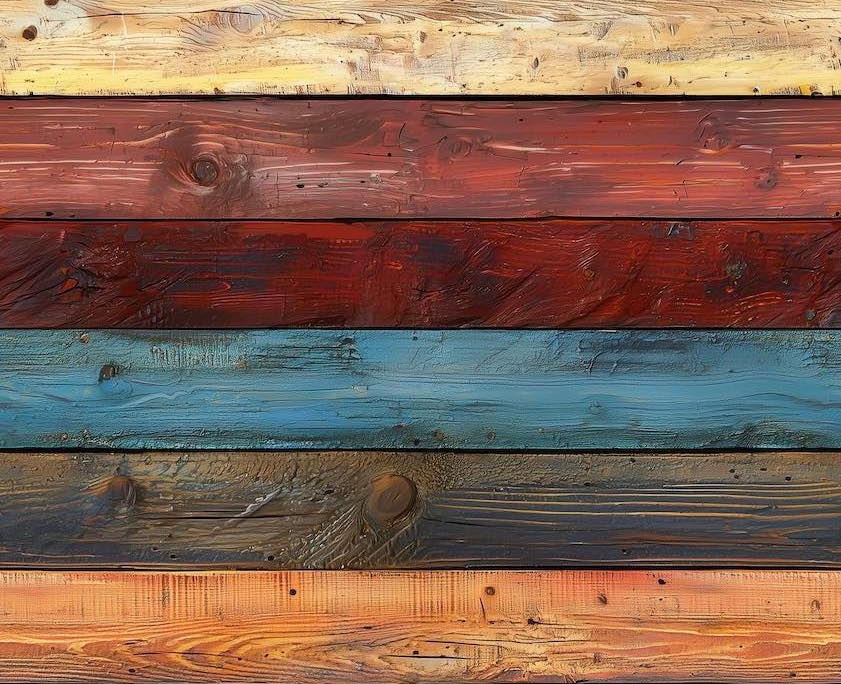
In our experiment, we used traditional Chinese medicine extracts to dye wood.
In addition to avoiding the impact of chemical paint on human body; After dyeing, the color and texture quality of the wood are improved, which makes cheap wood have higher price and improves the value of wood;
At the same time, it can reduce the felling of slow growing precious wood, which has the functions of environmental protection, earth love and carbon saving.
The test material was pretreated with hydrogen peroxide and surfactant, and the bleaching effect was obvious. After dyeing with different Chinese medicinal materials, soak in strong acid and alkali solution for 15 minutes, which shows that strong acid and acid treatment is not allowed. In addition, after 15 minutes of immersion in detergent, the color difference value is less than 2, and the rubbing fastness is above grade 4. In the bacteriostasis experiment, no fungus grew in the first 3 days, and it did not grow in the 12th day. In the anti termite experiment, the mortality rate on the fifth day was 65% for Lithospermum and 83.8% for Wolfberry, and the other groups had a good effect of total elimination.

Alongside plastic products, chemical carcinogenic wood dyes can harm the environment and cause detrimental impact to the health of children and adults.
There are 6 Experiments below:
Before wood dyeing, pretreatment must be carried out to remove pigments, tannins and other impurities that affect the dyeing, so as to reduce external interference in the dyeing project. The wood selected in this group is relatively soft, so only 5.0% H2O2 is used for bleaching, and then 5.0g/l fatty alcohol surfactant is used for washing. Lab value measured after bleaching: the red and yellow parts are reduced, indicating that the bleaching effect is reached.
After moisture absorption, the test material will be dried for about 8~9 hours under constant temperature and humidity in the indoor air conditioner. Continue drying at 50 ℃ for 35 hours to achieve a more dry degree. After drying, the test material will be placed indoors. The quality will change due to changes in temperature and humidity.
After being bleached, the test materials were dyed with six different Chinese medicinal materials, and the color after being dyed with “rehmannia” was similar to that of high-value walnut. After immersion in pH 3 hydrochloric acid and pH 10 sodium hydroxide aqueous solution for 15 minutes, the color difference value is between 3 and 4, indicating that strong acid or strong acid treatment is not allowed after dyeing with Chinese herbal medicine. In addition, if the detergent is soaked for 15 minutes, the color difference value is less than 2, which requires an experienced observer to notice the difference; The rubbing fastness is above grade 4.
During the bacteriostasis time, no fungus was found on the first three days of the six test materials. On the seventh day, it was found in Rehmannia glutinosa group, and on the twelfth day, no fungus was found on the control group in the 2.0% boric acid aqueous solution. This provided a method to inhibit fungi for this group of experiments, that is, boric acid can be added at the time the traditional Chinese medicine staining.
In this experiment, six kinds of Chinese medicinal materials’ effects on termite resistance result good, and the fastest death is turmeric and boric acid in the control group; On the fifth day, only two groups survived: 21 lithospermum (35%) and 10 wolfberry (16.7%).
With the continuous development of man-made architecture,
people have less and less precious natural resources.
With the continuous development of natural forest resources, people have less and less precious wood.
01.
Wood dyeing can improve the decorative quality of wood. Wood dyeing can be used to make all kinds of wood with bright color, clear texture, and natural wood characteristics.
02.
It can be used to produce industrial products in line with market demand to improve the value of low-quality wood, reduce the cutting of precious trees.
03.
Also have the function of environmental protection and carbon reduction.
However, there are still many post-processing problems to solve. Like fabric dyeing, treatment is still required. At present, the problems to be overcome are listed below:
Natural medicinal materials have bacteriostatic effects. In order to avoid “polysaccharides” in plant materials and let bacteria grow nutritionally, natural minerals should be used to prevent and control biological hazards.
The increase of wood strength, that is, the increase of density, is intended to be filled and improved in the low density wood gap with cohesive and significant materials.
Beeswax or paraffin oil can be used to increase the brightness and waterproof protection of the dyed wood.