Transforming Spent Coffee Grounds into New Materials-Biodegradable Plastic Alternatives
Keywords
- 1. Finalist - 2020 National Primary and Secondary School Science Fair
Patent
- 1. Taiwan Patent No. 110206698
- 2. Germany Patent No. 202021106080.8
Through online research, I compiled a list of currently known biodegradable plastics and alternative packaging materials available around the world, as outlined below. My plastic alternative innovation involves extracting coffee proteins from discarded coffee beans and combining them with optimized chitosan to create the material.
The purpose of this experiment was to extract and utilize proteins from spent coffee grounds. The coffee beans used in the experiment were of the Arabica variety, grown by farmers in Guoxing Township, Taiwan. They were part of the 2020 harvest, hand-selected, unroasted, and free from rot or insect damage. The beans were blended into a slurry to create coffee slurry and the filtrate was treated with buffer solutions ranging from pH 3 to 11. The samples were then tested at 21°C (room temperature, unheated), 40°C, 60°C, 80°C, and 100°C for 10 minutes each. The highest amount of coagulated protein was observed at pH 3–4 at room temperature (21°C). To form the coffee protein film, sodium alginate and glycerol—both high-temperature-soluble, non-toxic, and edible substances—were added at concentrations between 10% and 20%, successfully producing a biodegradable film. For antifungal testing, fungi were cultured in PDB (Potato Dextrose Broth), and the addition of 10% chitosan was found to have an inhibitory effect on fungal growth.

Given the widespread coffee-drinking culture in Taiwan, a large quantity of coffee beans is either imported or locally grown. During the selection process, beans that are visually unappealing or considered defective are often discarded. This experiment aims to extract residual value from such spent coffee grounds, specifically by utilizing the coffee proteins they contain.
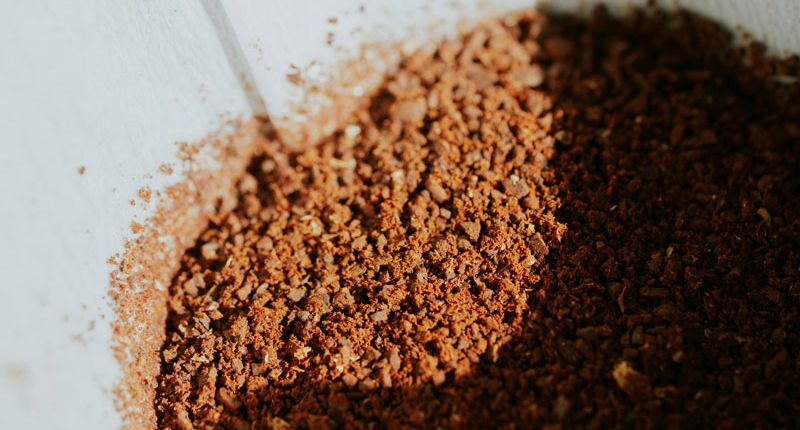
Given the widespread coffee-drinking culture in Taiwan, a large quantity of coffee beans is either imported or locally grown. During the selection process, beans that are visually unappealing or considered defective are often discarded. This experiment aims to extract residual value from such spent coffee grounds, specifically by utilizing the coffee proteins they contain.
In the future, we plan to further optimize the room temperature stability of the coffee protein film, control the precision of its thickness, and examine its solubility under various environmental temperatures.
In the future, we plan to further optimize the room temperature stability of the coffee protein film, control the precision of its thickness, and examine its solubility under various environmental temperatures.
Considering the enormous volume of plastic packaging used in food products—such as coffee creamer capsules, seasoning sachets in instant noodles, packaging for ready-to-eat soup bases, or dissolvable health supplement pouches—we believe this coffee protein film has the potential to serve as an eco-friendly alternative.
Considering the enormous volume of plastic packaging used in food products—such as coffee creamer capsules, seasoning sachets in instant noodles, packaging for ready-to-eat soup bases, or dissolvable health supplement pouches—we believe this coffee protein film has the potential to serve as an eco-friendly alternative.
Beyond contributing added flavor through the use of soluble proteins, this biodegradable material could significantly reduce the need for petroleum-based plastics in food packaging. We hope this effort will help promote environmental sustainability and reduce plastic waste for the sake of our planet’s future.
Beyond contributing added flavor through the use of soluble proteins, this biodegradable material could significantly reduce the need for petroleum-based plastics in food packaging. We hope this effort will help promote environmental sustainability and reduce plastic waste for the sake of our planet’s future.
In recent years, researchers have explored functional (non-toxic) amyloids—such as those derived from food proteins like whey, soy, or plant seed proteins—as building blocks for biodegradable films and coatings. These amyloid-based biopolymers can be combined with other natural materials to form:
Key benefits:
Incorporating nanoparticles (e.g. ZnO) into corn-starch films improved antimicrobial activity and biodegradability in food packaging applications
Grown from fungal mycelium and agri‑waste, materials like Ecovative’s MycoComposite offer compostable alternatives to polystyrene packaging.
Alternatives made from cork, apple peel, cactus, and mycelium, offering biodegradable or partially biodegradable materials for fashion and upholstery.
In recent years, researchers have explored functional (non-toxic) amyloids—such as those derived from food proteins like whey, soy, or plant seed proteins—as building blocks for biodegradable films and coatings. These amyloid-based biopolymers can be combined with other natural materials to form:
Key benefits:
Incorporating nanoparticles (e.g. ZnO) into corn-starch films improved antimicrobial activity and biodegradability in food packaging applications
Grown from fungal mycelium and agri‑waste, materials like Ecovative’s MycoComposite offer compostable alternatives to polystyrene packaging.
Alternatives made from cork, apple peel, cactus, and mycelium, offering biodegradable or partially biodegradable materials for fashion and upholstery.

PLA and PHA require specific composting conditions—access limitations affect their environmental advantages

Bio-alternatives may lack barrier strength or need additives; e.g. cellulose films need enhancement to resist moisture and oxygen.

Biodegradable plastics and plant-based packaging materials offer promising ecological alternatives, each balancing benefits with practical limitations. Academic and industry progress—such as amyloid polymer films, PHAs, and mycelium composites—is rapidly advancing the field’s viability. Continued innovation, proper infrastructure, and interdisciplinary collaboration are essential to ensure these materials fulfill their sustainable promise.
| Type | Source/Method | Benefits | Challenges |
|---|---|---|---|
| PLA, PBS, PHA | Fermented plant sugars / microbes | Compostable, scalable, fossil-free | Require industrial composting, cost |
| Amyloid–polymer films | Food proteins + biopolymers | Clear, flexible, biodegradable | Scale-up and mechanical strength |
| Cellulose & algae films | Plant fibers, algae extracts | Active packaging, shelf-life extension | Moisture resistance |
| Starch films with ZnO | Corn-starch + nanoparticles | Antimicrobial, biodegradable | Nanotoxicity concerns |
| Mycelium composites | Fungal mycelium + agri-waste | Compostable, structural foam replacement | Industrial scale implementation |
| Bananatex, Piñatex | Banana, pineapple fibers | Durable textile, reduces waste streams | Resin addition limits full biodegradation |
| MarinaTex | Red algae + fish waste | Home compostable, strong | Still early-stage, requires testing |